Ever been in a building with mid-rise elevators, maybe 5 to 15 stories, and noticed they’re way quieter than the old ones that rattle your whole apartment when they pass by? Chances are, those are machine room-less (MRL) elevators, and the noise reduction tech that makes them work is one of the biggest reasons more building owners and property managers are ditching the traditional setup these days. As an MRL elevator supplier, I get asked all the time: “How do you make a heavy metal box with people inside move up and down a shaft without sounding like a construction zone?” Let’s break this down, no stuffy engineering jargon, just the real stuff we use on every install. Machine Room Less Elevators
First, let’s get the basics straight to set the scene. Traditional elevators have a big, loud machine room on the top floor—think a huge gearbox, a motor spinning super fast, and all that metal clanking as the cables run over pulleys. That machine room is basically a noise factory, and if you’ve ever lived next to one, you know it. MRLs take all that machinery and tuck it inside the elevator shaft itself, which cuts out a ton of noise right there, but that’s just the start. The key is that every part of the system is engineered to eliminate vibration and sound at the source, not just mask it after it happens.
Let’s start with the motor, because that’s the main noise culprit in any elevator. Old elevators used AC motors with big, heavy gears to turn the sheave (the big wheel the cables wrap around). Gears = metal grinding against metal, plain and simple. MRLs use permanent magnet synchronous motors (PMSMs), but not just any—we use direct-drive ones. Direct-drive means there’s no gearbox between the motor and the sheave. No gears = no gear whine, no metal-on-metal friction that turns into high-pitched noise that travels through the shaft and into the walls. I’ve had old building managers tell me their only complaint with traditional elevators was that the gear whine could be heard two floors down, even when the elevator wasn’t moving. With direct-drive PMSMs, that’s gone. Plus, these motors run much smoother—they don’t jerk when starting or stopping, which cuts down on the vibration that would otherwise rattle the elevator car and the shaft structure.
Next up, the drive system and cable management. The cables that hold the elevator car are usually steel, right? If they’re loose or dragging, they can slap against the side of the shaft, making a dull, thudding noise every few feet. We use tensioned cable systems, where each cable is adjusted to the exact same tension from the factory. No slack = no slapping. But we don’t stop there. On the top of the car, where the cables connect, we use rubber bushings and dampers between the cable brackets and the car frame. Those small parts might seem trivial, but they absorb the tiny vibrations that would otherwise turn into noticeable rattle when the car moves at speed. Also, we don’t run the cables straight over the sheave anymore—wait, no, actually we do, but we use a helically grooved sheave. The grooves grip the cables tightly, so they don’t slip, and they reduce the noise the cables make as they turn. It’s a tiny design change, but it adds up.
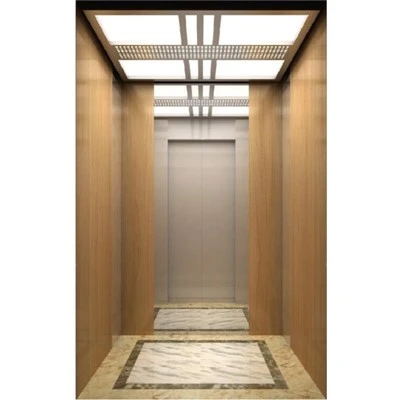
Then there’s the elevator car itself. A lot of people don’t think about this, but the car’s interior and how it’s mounted affect noise a lot. Old elevator cars are usually bolted directly to the frame, so every little vibration from the motor or cables travels straight into the car. We use floating car systems. That means the car body isn’t hard-mounted to the frame—there are rubber or urethane pads between the car walls, ceiling, floor, and the steel frame. Those pads act like noise canceling for the car interior. If you’re inside the elevator, you won’t hear the faint hum of the motor or the tiny bumps from the shaft walls because the pads absorb almost all of that. We also line the car walls and ceiling with dense, sound-absorbing panels that are thin enough not to take up extra space inside the car, but thick enough to muffle any sound that does get through. No more feeling like you’re in a tin can moving through the shaft—you get a smooth, quiet ride, even when the elevator is running at full speed.
The shaft structure is another big piece. Traditional elevator shafts are usually concrete, but they can have gaps or loose joints between the panels, which let sound travel through. On our MRL installs, we do what we call shaft sealing and damping. First, we use prefabricated steel shaft panels that are thicker than standard ones, and we seal every joint between them with acoustic caulk. That stops airborne noise from seeping out into the hallways or adjacent rooms. We also add viscoelastic damping layers to the back of the shaft panels. Those layers absorb vibration—so when the motor’s hum does vibrate the shaft wall, the damping layer turns that vibration into tiny amounts of heat before it can travel into the building structure. I’ve had clients in residential buildings tell us they didn’t even know the elevator was running until someone told them, because the hallway next to the shaft was completely quiet.
Wait, what about door noise? Elevator doors are another common noise point, especially when they open and close fast. Old elevator doors use metal rollers that run on metal tracks, and if the tracks are misaligned, they can make a screeching noise that’s super annoying. We use soft-closing door systems with nylon rollers and precision-aligned tracks. The nylon rollers don’t screech against the metal track—they glide smoothly, and we add rubber bumpers where the doors meet the frame to absorb the thud when they lock into place. We also adjust the door speed so it doesn’t slam, which might sound slow, but it actually cuts down on way more noise than it saves time. For high-traffic buildings, we even have automatic door alignment sensors that adjust the track tension on the fly, so if the shaft shifts a tiny bit over time, the doors stay quiet.
Another thing that’s easy to overlook is control systems. Old elevator control panels send power in big, jerky bursts that can make the motor work harder than it needs to, leading to more noise. Our MRL elevators use variable frequency drives (VFDs) that regulate the power to the motor smoothly, so it starts, runs, and stops at exactly the speed it needs, with no extra effort. That means less strain on the motor, less vibration, and way less noise. The VFD also adjusts the elevator’s speed based on how many people are inside—if it’s just one person going up a few floors, it moves slower and quieter than if it’s carrying a full load. It’s a small tech feature, but it makes a huge difference for noise, especially in smaller, low-traffic buildings.
Now, let’s talk about why this matters more than ever. A lot of cities are tightening noise regulations for residential and commercial buildings, especially in mid-rise apartments, offices, and hotels. If a building is too noisy, it can hurt occupancy rates, and property managers have to deal with complaints all the time. MRL elevators are also cheaper to install and maintain than traditional ones, so the noise reduction tech doesn’t just make the building nicer—it adds value, too. We’ve had clients who bought their building right after we installed our MRLs because the elevator noise was a big selling point. Even in industrial buildings, where people expect more noise, our MRLs are quieter than the previous setups, so workers don’t have to wear earplugs around the elevator all day.
I’ve been in the elevator industry for over a decade, and I’ve seen so many projects where the wrong elevator choice led to constant noise complaints. That’s why we prioritize noise reduction in every MRL install, not as an afterthought, but as a core part of the design. It’s not just about checking a box—it’s about making the elevator work for the people using the building, not against them.
If you’re a building owner, property manager, or architect looking to upgrade your elevators or install a new MRL system, the noise of your elevator is something you don’t want to ignore. Even a small amount of noise can add up to big complaints, high turnover, or even fines in some areas. We work with every type of building, from 5-story residential apartments to 15-story offices, and we can tailor the noise reduction tech to fit your specific space and budget. Whether you’re renovating an old building or designing a new one, we can help you get an elevator that’s quiet, smooth, and reliable. Reach out to us to discuss your project, get a customized quote, and figure out how our MRL elevators can work for you. No pressure, no sales pitches—just straight talk about what works for your building.
Machine Room Less Elevators References
- "Machine Room-Less Elevators: Design and Application Guidelines," Elevator World Magazine, 2021
- "Noise Control in Vertical Transportation Systems," International Association of Elevator Engineers (IAEE) Technical Report, 2022
- "Permanent Magnet Synchronous Motors for Elevator Propulsion," IEEE Transactions on Industry Applications, Vol. 58, No. 3, 2022
- "Acoustic Damping for Building Shafts in MRL Elevators," Journal of Building Acoustics, Vol. 29, No. 2, 2023
- "Modern Elevator Door Systems: Noise Reduction and Performance," Elevator Technology Review, 2021
Ningbo Dongao Elevator Co., Ltd.
As one of the most experienced machine room less elevators manufacturers and suppliers in China, we also support customized service. We warmly welcome you to buy high quality machine room less elevators for sale here from our factory. For quotation, contact us now.
Address: No. 16 Xiapan Road, Ninghai County, Ningbo City, Zhejiang Province
E-mail: 13777289058@163.com
WebSite: https://www.daelevator.com/
