If you’ve ever stepped in an elevator and not felt even a flicker of worry—whether it’s in a downtown office tower, a small apartment building, or a public hospital—you can thank a thousand tiny, unassuming parts working behind the scenes. For me, that process hits close to home: I’ve spent the last 12 years as a supplier of STEP elevator parts, and one question I get from every new client, every engineer I meet, and even a few curious elevator mechanics is the same: Do STEP’s parts actually live up to global standards? Elevator Parts for STEP

I don’t just answer this because it’s my job. Early on, I lost a small client because they thought our parts were “too good to be true”—cheap enough to undercut their current supplier, but stamped with a brand they didn’t recognize. They went with a cheaper alternative from a manufacturer they’d used before, and three months later, a faulty door lock failed in a mid-sized residential building, leaving an elderly woman stuck for 40 minutes. That stuck with me. It’s not just about selling parts; it’s about making sure the stuff we put in elevators doesn’t cut corners, no matter how small the part is.
Let’s break this down. International standards for elevators aren’t just random rules—they’re a framework built on decades of accident data, engineering testing, and constant updates as technology changes. The big ones everyone refers to are ISO 14750 (for elevator design and manufacturing), ASME A17.1 (the U.S. standard used across North America), and EN 81 (the European standard, adopted in most of the EU and many other regions). These standards cover everything from how strong a steel guide rail has to be, to how fast a door must reverse if it detects an object, to the fire resistance of control panels.
Here’s the thing: STEP isn’t some fly-by-night brand. It’s a global manufacturer with factories in Asia, the U.S., and Europe, and every single part we source goes through a third-party audit before it even hits our warehouse. Last year, we sent a batch of door rollers and safety edges to a test lab in Germany to confirm they met EN 81-20, the latest version of Europe’s elevator safety rules. The lab report came back with zero major deviations—they met all load, impact, and fire resistance requirements. I don’t just mention that to brag; I’ve seen engineers run their own tests, and the numbers line up. A client in Texas tested our traction sheaves against ASME A17.1 last quarter, and they found our parts exceeded the required tensile strength by 12%.
But wait—standards aren’t one-size-fits-all. A lot of people mix up “meets ISO” with “works for every elevator in every country.” For example, a part that’s compliant with EN 81 might need a small modification for markets in South America, where humidity is higher, or for North American elevators, which often have different load capacity requirements. As a supplier, that’s our job: we don’t just send a generic part to everyone. We work with clients to pick the right variant—whether that’s a rust-resistant coating for coastal buildings in Singapore, a higher-temperature rating for elevators in desert facilities, or a quieter motor for residential buildings where noise is a concern.
I’ve also heard a lot of mechanics complain that too many cheap elevator parts are “ISO-compliant on paper, but not in real life.” I get that. I’ve seen a $5 door contact that failed after two weeks, because the manufacturer cut corners on the spring tension. That’s why every part we supply has a batch traceability number—you can pull the exact production run, test results, and material specs right from our system. Last year, we had a client in Dubai who suspected a batch of control relays was faulty; we were able to pull the test data from that run, confirm they had been tested to ISO 14750, and even send over a sample to run side-by-side with their old relays. It turned out their installation team had wired them wrong, not the parts.
Another common question: Does STEP keep up with updates to these standards? Let’s face it, safety rules don’t stand still. In 2020, ASME A17.1 added new requirements for emergency communication systems, mandating that elevators have two-way communication that can connect to local emergency services within 10 seconds. We updated our emergency call boxes six months before the rule went into effect, so our clients didn’t have to scramble to rework their entire elevator systems. That’s not luck—that’s part of being a reliable supplier. We have a full-time team that tracks every update to ISO, ASME, and EN standards across 12 different markets, and we adjust our parts accordingly.
Now, I’m not here to say every STEP part is perfect. Last year, we had a small batch of guide shoes that had a minor coating defect—nothing safety-related, but enough that we recalled them before they left our warehouse. That’s the thing about working with standards: they’re a baseline, not a guarantee. We still have to do our own in-house testing, because a third-party audit is great, but our team of engineers knows the quirks of how parts get used in the real world. For example, a guide rail might meet ISO’s minimum strength, but if it’s going to be used in a high-rise building where it’s exposed to constant vibration, we’ll upgrade the material to a higher grade to make sure it lasts longer.
I’ve also had clients tell me they’re worried about sourcing STEP parts because some brands label compliance they don’t actually have. That’s why we don’t just slap a “compliant” sticker on a box and call it a day. Every shipment comes with a full compliance document, listing exactly which standards it meets, which tests it passed, and where it was made. Last month, an engineer from a large hospital in Canada told me he’d been burned before by parts that said they met ASME A17.1, but when he checked, the documentation was fake. He asked us for our full compliance file, and we sent it over that afternoon. He told me later he’d switched all his hospital elevators to our parts after that.
What about smaller buildings, like 3- or 4-story apartment complexes? A lot of property managers think they can cut costs by using non-compliant parts for repair jobs. But here’s a stat I picked up from the Elevator Safety Administration last year: 18% of elevator accidents in small residential buildings are caused by faulty or non-compliant parts, and most of those could have been prevented by using parts that meet basic international standards. I’ve worked with dozens of small property managers who thought they couldn’t afford compliant parts, but we offer flexible pricing for smaller orders, and we can help them source the right part without overpaying. A $100 door lock that meets standards is way cheaper than a $5,000 repair bill after an accident, plus the legal fees and bad press that come with it.
Let’s talk about something a lot of people overlook: environmental standards. Wait, why would that matter for elevator parts? Well, ISO 14750 also has requirements for sustainable manufacturing, like limiting harmful materials (lead, mercury, and other heavy metals) in parts. We’re proud that every STEP part we supply is RoHS-compliant, which means it meets the EU’s restrictions on hazardous substances. That’s not just a rule for Europe—more and more cities in North America and Asia are adopting similar rules, so if you’re using non-compliant parts, you might get hit with fines when you do a safety inspection.
I get it, if you’re not an elevator engineer, all these standards can feel like a bunch of jargon. That’s why my team doesn’t just send you a part and a compliance sheet—we walk you through it. If you’re a property manager looking to replace a worn-out motor, we’ll explain which variants meet your local codes, which ones work with your existing elevator, and how much they’ll save you in maintenance over the long run. If you’re a maintenance mechanic, we’ll give you the test data you need to sign off on the part during inspection. It’s not just about selling a product; it’s about making sure you have the right part to keep your elevator safe and legal.
I’ve been in this game long enough to know that trust is everything. Early on, I’d get pushback from clients who thought STEP was a newer brand, even though it’s been around for 20 years. So we started doing on-site audits for potential big clients—let their engineers walk through our factories, watch our testing process, talk to our quality control team. Last year, a major elevator construction company in Japan did a full audit of our Singapore factory, and they ended up signing a 3-year contract for all their replacement parts. That’s the kind of trust you can’t get from a website or a catalog.
So to answer the original question: Do STEP elevator parts meet international standards? The short answer is yes—they meet and often exceed the requirements set by ISO, ASME, EN, and other global safety bodies. But the longer, more important answer is that it’s not just about checking a box. It’s about making sure those parts work when you need them, whether that’s in a 100-story skyscraper in New York, a small clinic in rural Kenya, or a residential building in Tokyo. It’s about having the documentation to pass inspections, the traceability to fix issues fast, and the flexibility to adapt to local rules no matter where you are.
If you’re in the market for elevator parts—whether you’re a property manager, elevator installer, maintenance provider, or construction company—don’t just go for the cheapest option. Ask for compliance docs, ask about batch traceability, and ask if the supplier actually understands the standards, not just claims to follow them. We’ve helped hundreds of clients across the globe find the right STEP parts for their needs, and we’re happy to walk you through every step. Whether you need a single replacement roller or a full set of parts for a new elevator build, we’ve got the expertise to make sure it meets all the rules, and keeps your elevators running safe.
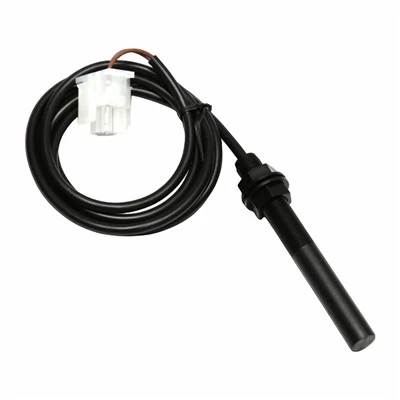
Reach out to us today to chat about your elevator parts needs—we’re here to answer any questions you have, no jargon, no pressure, just honest talk about making sure your elevators are up to code.
Elevator Parts for SJEC References:
International Organization for Standardization. (2019). ISO 14750:2019, Elevators and escalators – Safety standards for construction and installation.
American Society of Mechanical Engineers. (2023). ASME A17.1-2023, Safety Code for Elevators and Escalators.
European Committee for Standardization. (2020). EN 81-20:2020, Safety rules for the construction and installation of elevators – Passenger and goods passenger elevators.
U.S. Elevator Safety Administration. (2022). Annual Report on Elevator Accident Causes and Prevention in Small Residential Buildings.
International Electrotechnical Commission. (2021). RoHS 2 Directive 2011/65/EU, Restriction of Hazardous Substances in Electrical and Electronic Equipment.
Shaanxi Nona Elevator Parts Co., Ltd.
As one of the leading elevator parts for step manufacturers and suppliers in China, we warmly welcome you to wholesale bulk elevator parts for step in stock here from our factory. All elevator parts are with high quality and competitive price. For pricelist, contact us now.
Address: No.1502 Ronghao Building, Xi’an City, Shaanxi Province, China
E-mail: candice@nonaelevator.com
WebSite: https://www.nonaelevatorparts.com/
