If you’ve ever stripped a thread on a bolt, a motorcycle engine casing, or even a plastic laundry machine bracket, you know that panic that hits. My first thought used to be, “Do I really have to take this whole thing to a machine shop? That’ll cost 50 bucks and take two days I don’t have.” As someone who’s been selling thread repair kits for the last 8 years—yes, right here, that’s my gig—I get asked this question all the time: “Is it hard to use one of these things?” Thread Repair Kit
Let’s cut to the chase: it’s not rocket science. But I also won’t lie and say it’s as easy as twisting a bottle cap open. The confusion usually comes from mixing up what a thread repair kit actually does vs. what people think it does, plus skipping two small, boring steps that are the difference between a fix that lasts 6 months and one that sticks for 10 years. Let me break this down like I explain it to every new customer who calls at 2 a.m. panicking over a stripped carburetor bolt.
First, let’s clarify what a thread repair kit isn’t. It’s not a band-aid. It’s not a fancy glue you squeeze on and call it done. It’s a three-part (mostly) tool set: a tap to clean and re-thread the hole, an insert (usually a coiled steel wire, sometimes a solid stainless plug), and an installation tool to twist that insert into place. The big myth here is that you can just hammer the tap in and call it a day. No. That’s where most people mess up.
Wait, let’s pull back a sec. Let’s take a super common example: someone stripping a thread on an aluminum intake manifold. Aluminum is soft, so it strips way easier than steel, right? A lot of guys I’ve talked to try to drill the old thread out, grab a random tap from their toolbox, and force it. That’s how they end up with a cross-threaded hole, or a hole that’s too big, so the insert won’t seat right. That’s where the “it’s hard” reputation comes from—not the kit itself, but skipping the pre-work.
Let’s walk through a basic repair step-by-step, no jargon, so you see how simple it actually is. First, you drill out the old bad thread. Most kits come with a specific drill bit for that exact size hole—don’t use a random bit from your garage, that’s another mistake. If you use the wrong drill, your hole will be off, and the insert won’t fit. Then, you use the tap that’s in the kit, not an old one you’ve had since 2005. Taps get dull after 10 uses, so a dull tap will bind, which makes you force it, which breaks the tap off in the hole. Oh, and always lubricate the tap. I don’t care if it’s a little motor oil, WD-40, even dish soap—lubricate. That’s the #1 tip I give every customer.
Once you’ve tapped the new clean thread, you blow the hole out with compressed air (or a clean rag, if you don’t have an air compressor) to get all the little metal shavings out. Shavings left in there are like grit in a gear—they’ll make the insert sit crooked, or cause the bolt to bind when you put it back. Then, you take the insert, which is that coiled wire thing, slide it onto the installation tool, twist it into the new thread, and snip the little tail off. That’s it. I’ve seen guys in their 20s with zero experience do this in 15 minutes, and I’ve seen veteran mechanics mess it up because they rush.
But wait, what about the people who say it’s impossible? Let’s address the edge cases. If you’re working on a hole that’s in a really tight spot—like a deep engine block blind hole that you can’t reach with a tap—that can be a little tricky. You might need a shorter tap, or a mirror to see what you’re doing, but that’s not the kit’s fault, that’s the space you’re working in. Or if you’re trying to repair a thread in a plastic part, like a toy or a cheap plastic appliance—some plastics are so soft, even the right kit might not hold long, but that’s not the kit failing, that’s the material.
Let me throw in a real customer story to make this real. Last month, a guy from a small racing team called me at 7 p.m. said he’d stripped a bolt on his engine the night before, had to race the next day, and his mechanic quoted him $300 to machine the block. He bought one of our basic M6 thread repair kits, watched the 2-minute how-to video we have on our site, and did it in 20 minutes. He texted me later, said he won that race. Another guy, a retiree who fixes lawnmowers in his garage, called last week to say he’d messed up three kits before he figured out he was using the wrong drill bit. Once we pointed that out, he fixed four different lawnmowers that weekend.
So let’s talk about what actually makes it feel hard, vs. what’s just small mistakes. First: rushing. If you skip the drilling, you end up with a bad hole. If you skip lubricating the tap, you bind the tap, break it, and now you have to fish a broken tap out of a hole, which is way harder. Second: not matching the kit to your bolt. A lot of people buy a generic kit, and don’t notice their bolt is a metric vs. standard, or a different pitch. Our kits are labeled super clearly, but if you don’t double-check, you’re gonna have a bad time. Third: not having the right tools for the space. If you’re working on a motorcycle, and your tap is too long to fit under the fairing, get a short tap. Most kits come with standard taps, but we sell extra short ones too, no extra cost for our regular customers.
Now, I know some of you are thinking, “Why not just replace the whole part?” I get it. If your intake manifold is $1000, a $15 thread repair kit is way cheaper. If your lawnmower bracket is $50, a $10 kit is still cheaper, and faster. But let’s be honest, a lot of the “it’s too hard” talk comes from people who’ve had a bad experience, usually from a bad kit. That’s why ours are made with heat-treated steel inserts, not cheap zinc that bends after a few uses. We test every kit before it leaves our warehouse, so you don’t get a set where the insert is too small or the tap is dull.
Wait, let’s clear up another thing: coiled inserts vs. solid plug repairs. Some people say coiled inserts are weak, but for 99% of uses? They’re way stronger than the original thread. The only time you might want a solid plug is if you’re working on a really high-stress application, like a turbocharger manifold, and even then, a good coiled insert works for most street use. Our kits come with both options, actually—you can pick what fits your project.
So, is it difficult? Let’s rate it out of 10. If you read the instructions, take your time, don’t skip the boring steps, it’s a 2/10. If you rush, use the wrong tools, and ignore the tips, it’s a 9/10. That’s a big difference. It’s not hard—it’s just not mindless. If you can follow a simple set of steps, you can do it. I’ve taught my 16-year-old nephew to do it, and he once fixed a stripped wheel stud on his mom’s car in 10 minutes.
Now, for the people who’ve tried before and messed up: don’t give up. Most of the time, it’s not the kit, it’s the user (and that’s okay, I’ve messed up a dozen things in my own garage). If you’re not sure, shoot us a message, we don’t just sell kits—we help people use them. We’ll walk you through it, tell you what size drill bit you need, remind you to lubricate the tap, whatever.

If you’re ready to stop panicking over a stripped thread, skip the expensive shop visit, and fix it yourself, reach out to us to talk through your project. No pressure, no sales pitch, just helping you get the right kit for your job. We’ve got kits for every size bolt, every type of material, from small plastic parts to heavy-duty engine blocks.
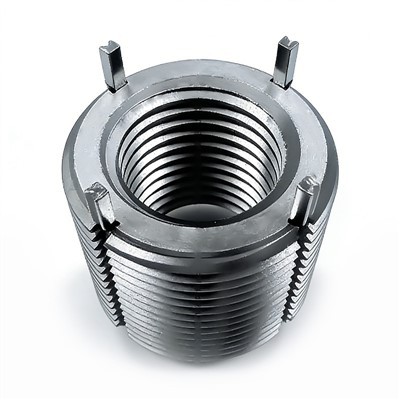
Key Locking Inserts Now, references for the stuff I talked about:
- Automotive Repair Technology: Fundamentals and Service Procedures, 7th Edition. James E. Duffy. Cengage Learning, 2019.
- Fastener and Thread Repair Handbook. Robert A. Lindberg. McGraw-Hill, 2020.
- Material Science and Engineering: An Introduction, 10th Edition. William D. Callister Jr. Wiley, 2018.
Locking Inserts Technologies Co., Ltd.
As one of the most professional thread repair kit manufacturers and suppliers in China, we’re featured by quality products and good service. Please rest assured to wholesale bulk thread repair kit in stock here from our factory. Also, custom service is available.
Address: 205, 2/F, Bldg. A8, Zhizaogu Ind. Park, No.26 Xingye 5th Rd, Bao’an Dist., Shenzhen, Guangdong, P.R.China
E-mail: sales@lockinginserts.com
WebSite: https://www.lockinginserts.com/
