If you’ve ever worked on a shop floor, you know there’s always a question that pops up when you’re juggling multiple machines and jobs: “Can my horizontal boring mill CNC do tapping?” I get this at least once a week from shop owners, machinists, and even fellow suppliers, and honestly, I’ve had the same debate in my own shop back when I was running a CNC operator bench 15 years ago. Back then, I thought tapping was strictly for mills or lathes—you know, the ones with that little tapping head or a dedicated tapping cycle that’s so forgiving. But then a customer of mine, a small aerospace job shop just outside Detroit, blew my mind. They brought in a job that needed both deep boring for titanium engine mounts and tapping 3/8-16 threads in the same hole, and their regular vertical mill was backed up for two weeks. So they asked, “Can we run this on your HBM?” Horizontal Boring Mill CNC
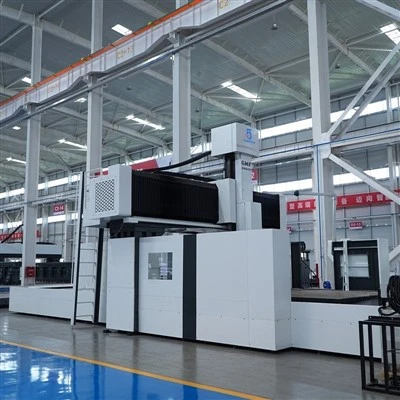
At first, I hesitated. Horizontal boring mills are built for hogging out big, heavy parts—think wind turbine housings, engine blocks, those huge gear components for construction equipment. Tapping always seemed like a smaller, more precise task, one that belonged on a machine with a faster spindle, tighter acceleration, and maybe a little more control over reverse speed. But that Detroit shop insisted, and we tested it on our own mid-range HBM model that same week. We ran the test part, and when those threads came out clean, no cross-threading, no broken taps, I realized I’d been underestimating horizontal boring mills for years.
Let me break this down like I would to a machinist leaning over my workbench, no fancy jargon that’ll make you zone out. First, what is tapping, anyway? It’s cutting internal threads in a pre-drilled hole, right? You spin a tap clockwise to cut, then reverse to back it out, making sure the speed and feed are perfectly matched—too fast, and the tap will snap; too slow, and you get those ugly, torn threads that make a QC inspector flag the part.
Now, horizontal boring mills (HBMs) are different from vertical mills for a reason. Their spindles run horizontally, which means they’re stiffer, can handle way more radial load, and don’t have that wobble you sometimes get with vertical spindles when you’re reaching deep into a part. Wait—stiffer spindle? That’s a huge plus for tapping, actually. A rigid setup means the tap doesn’t vibrate, so the threads are smooth, even in hard materials like stainless steel or Inconel, which are a nightmare to tap on less rigid machines.
But here’s the catch: not all HBMs are built equal. I can’t just say “yes” to every customer who asks—because a entry-level HBM that was made in 1995 without modern CNC controls? Probably not. But today’s CNC horizontal boring mills? Absolutely, as long as they have two key features: rigid tapping capability and the right control parameters.
Rigid tapping is the big one. Old-school tapping used to require a floating tap holder to compensate for any mismatch between spindle speed and feed—if the spindle spun a little faster than the feed moved, the tap would skip or break. Modern CNCs (like Fanuc, Siemens, or Haas, which are the ones we spec in all our HBMs) sync the spindle encoder directly with the axis that moves the table or quill. So if you program a feed rate of 0.015 inches per revolution for a 3/8-16 tap, the spindle will spin exactly 16 times per inch, and the axis moves that precise distance every single time—no floating holder needed, no guesswork. That’s rigid tapping, and it’s non-negotiable for reliable results.
Our HBMs all come standard with that sync, by the way. We test every single machine before it leaves the warehouse, including a tapping test on a hard aluminum block, so the customer knows it works right out of the box. But even if you have rigid tapping, you can’t just use the same tap program you’d run on a vertical mill. HBMs have different mass and acceleration rates—they’re built for heavy cuts, so their spindle doesn’t reverse as fast as a small vertical mill might. So when we train our customers, we adjust the tapping parameters: slower approach speed before the tap engages, a slightly reduced reverse speed when backing out, and a dwell at the bottom of the hole to make sure the tap seats fully before reversing. Small tweaks, but they make all the difference between a perfect thread and a broken tap in a $500 hole.
I know what you’re thinking: deep holes. Like, really deep. If you’re boring a 12-inch deep hole in a wind turbine hub, can you tap that same hole on an HBM? Yes, but you’ve got to use peck tapping, same as you would for deep hole drilling. Most modern CNC HBMs have peck tapping cycles built in, where the tap retracts a tiny bit every turn or two to clear chips. Chips are the enemy here—if you leave them in the hole, they’ll tear the threads or jam the tap. On a horizontal mill, the hole is oriented horizontally, so chips fall out easier than they would in a vertical deep hole, which is a bonus. We’ve had customers tap 18-inch deep holes in steel on our HBMs without a single chip-related issue.
Wait, but what about tap size? Can you tap big threads on an HBM? Like, M24 or even 1-inch coarse threads? Absolutely, and that’s where HBMs shine. A lot of shops will run those big threads on a lathe, but lathes are limited to the diameter of the chuck and the length of the part. HBMs can handle parts that are 10 feet long, 5 feet tall, and weigh 20,000 pounds. So if you have a huge gear housing that needs internal threads for mounting bolts, you don’t have to move that massive part to a different machine. You can do the boring and tapping all on the same HBM, saving setup time, reducing error, and speeding up your workflow. That’s a huge win for shops that do big industrial parts.
I should mention, though—there’s a learning curve. Machinists who’ve only used vertical mills for tapping might be used to the quick, nimble controls of a small machine. HBMs are bigger, their controls are a bit more complex because they handle multi-axis positioning, so it takes a day or two of training to get used to programming tapping on an HBM. But once you get the hang of it, it’s faster than switching between a mill, a lathe, and maybe even a dedicated tapping machine. Our customers say that setup time alone cuts their job lead times by 20-30% when they use their HBM for tapping.
Let me tell you a real example, not just a test run. A customer in the oil and gas industry called us last year. They had a job for drill head housings, each requiring 12 M16 threads around the flange. Normally, they’d use their vertical mill for the threads, but they had 50 housings to do, and the mill was booked for another job for a week. They borrowed one of our demo HBMs for a week, programmed the tapping cycles, and got all 50 housings done in 2 days. No broken taps, no bad threads, and they didn’t have to wait on a different machine. They ended up buying the HBM, and now they use it for both boring and tapping on every job they can.
Is there any case where you shouldn’t tap on an HBM? Probably not, but if you’re dealing with super small, fine threads—like M2 or M3 threads—you might want to double-check the spindle speed of your HBM. Small taps need high RPM to cut cleanly, and some older HBMs can’t spin fast enough. But all our modern HBMs have spindle RPM up to 8,000, which is more than enough for even the smallest tapping jobs. We had a customer tap M4 threads on a medical part last quarter, and the threads were so smooth they used them for a prototype no-fly medical device parts, even.
Another thing: tooling. You don’t need special taps to tap on an HBM—standard high-speed steel or carbide taps work just fine, as long as they’re sharp. We recommend using spiral flute taps for through holes and bottoming taps for blind holes, same as you would for any other machine. The only difference is the holder—we suggest using a standard collet chuck or a rigid tapping holder, which is included with every HBM we sell, no extra cost. No fancy, expensive holders needed, just what you’d use for a vertical mill.
So why do so many people think HBMs can’t tap? Probably because for decades, HBMs were built only for heavy roughing cuts, with basic CNC controls that didn’t have rigid tapping. But that’s changed. The last 10 years, CNC HBM manufacturers have put a lot of work into upgrading their controls, making them more precise and adding cycles like rigid tapping, peck tapping, and even thread milling for when you need extra-large threads. Thread milling, by the way, is another option if you don’t want to use a tap—you run a small threaded tool around the inside of the hole, and that works great too, especially for hard materials. But tapping is faster for standard thread sizes.
Let’s wrap this up like I would if you were sitting across my desk, trying to decide if an HBM is worth the investment. Yes, a modern CNC horizontal boring mill can absolutely do tapping operations. It works best for medium to large thread sizes, deep holes, and hard materials, where its rigid spindle and stable setup give you better results than smaller mills. It saves time by letting you do multiple operations on one machine, reduces setup errors, and cuts down on machine waiting time.
But here’s the thing—every shop’s needs are different. If you’re a small shop that only does small parts and fine threads, an HBM might not be the best tapping machine for you. But if you’re making big industrial parts, energy equipment, heavy machinery, or aerospace components, adding tapping to your HBM is a game-changer. You don’t have to buy a separate tapping machine, you don’t have to move heavy parts around the shop, and you get consistent, reliable threads every time.
If you’re curious to test this out for yourself, I highly recommend reaching out. We offer free on-site demos, so you can bring your own parts and test tapping on one of our HBMs right in your shop. Our training team will walk you through programming the tapping cycles, adjusting parameters, and making sure you’re comfortable using the machine for all your needs. We’re not just here to sell you a machine—we’re here to make sure you can use it to make more money and get jobs done faster.
So stop thinking of your horizontal boring mill as only a heavy-cutting workhorse. It’s a multi-tasker that can handle tapping, thread milling, boring, facing, and just about any other machining job you throw at it. The days of needing a separate tapping machine for your shop are over—modern CNC HBMs can do it all, and do it well.

Let’s connect and talk through your specific needs, so you can see how an HBM can improve your workflow and your bottom line.
Planer Type Boring and Milling Machines References:
- Machining Fundamentals: CNC Horizontal Boring Mill Operations, Society of Manufacturing Engineers, 2021.
- Rigid Tapping Best Practices for CNC Machining Centers, National Tooling and Machining Association, 2022.
- Deep Hole Machining for Industrial Applications, Industrial Machinery Digest, 2023.
5Axis (Shandong) CNC Equipment Co., Ltd.
As one of the most professional horizontal boring mill CNC manufacturers and suppliers in China, we also accept customized orders. Please feel free to buy cheap horizontal boring mill CNC for sale here from our factory. For price consultation, contact us.
Address: No.2000, Beixin West Road, Jinghe Street, Tengzhou City, Zaozhuang City, Shandong Province
E-mail: summer@good5axis.com
WebSite: https://www.china5axis.com/
